Coconut Oil from Vietnam | Supplying Raw Materials to Global Industries
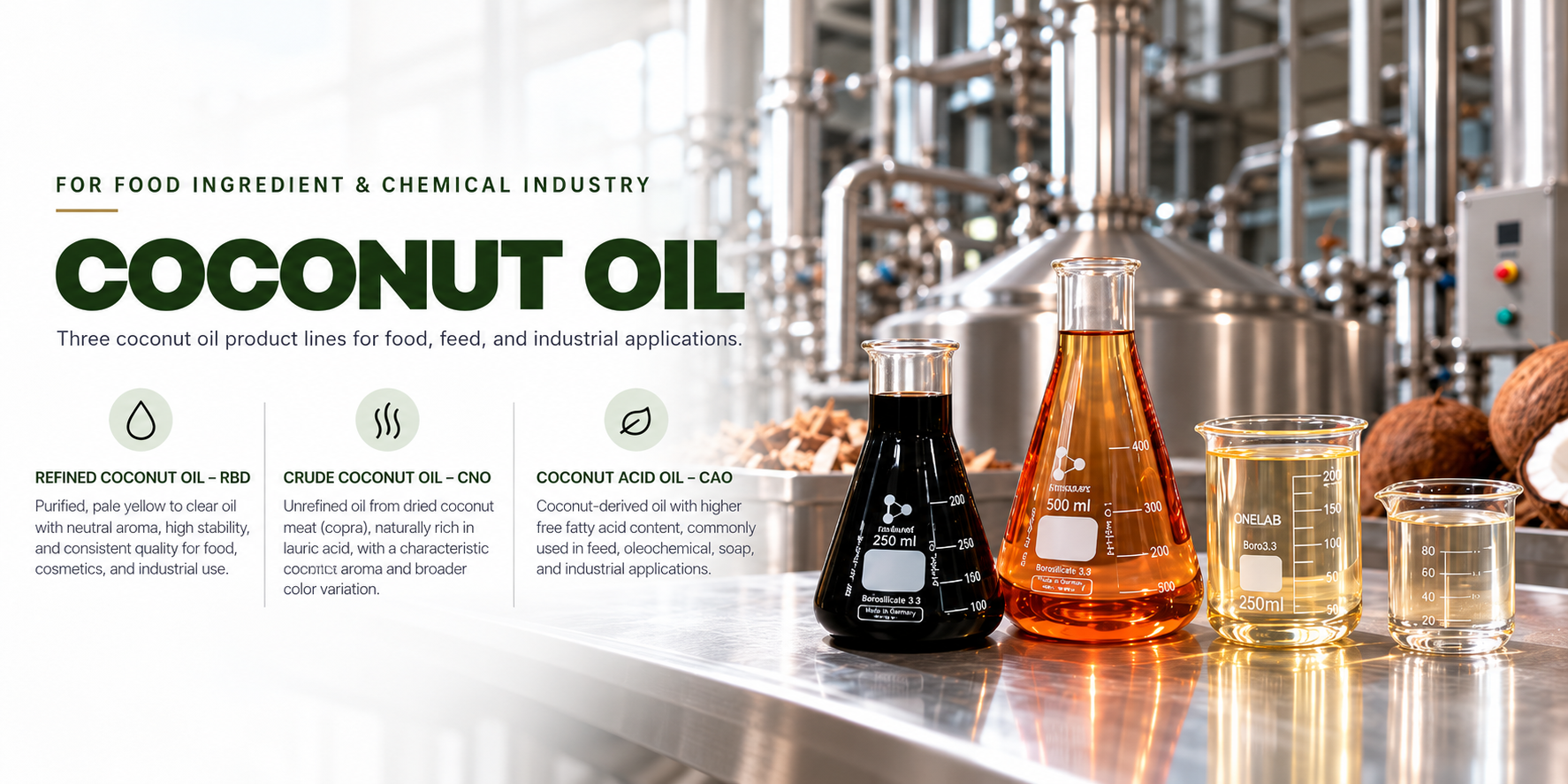
Bao Son supplies coconut oil from Vietnam to international importers, ingredient distributors and manufacturers. Coconut oil is a vegetable oil extracted from the kernel of the coconut (Cocos nucifera L.). For commercial buyers, the right grade depends on how the material will be used and which specifications it must meet.
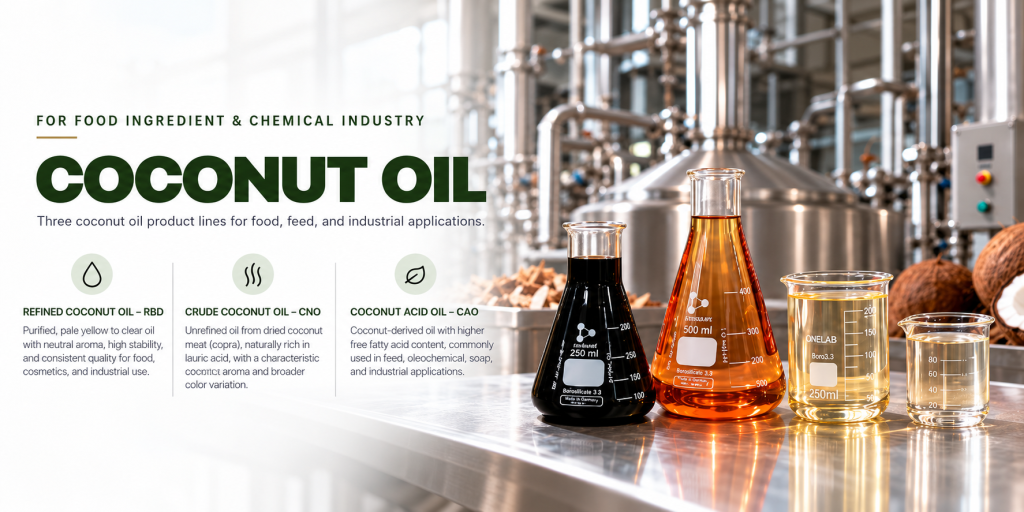
Start with your application. If you source feedstock for a refinery, review Crude Coconut Oil. If your production line requires a finished oil, ask about Refined Coconut Oil. If your process calls for an acid oil feedstock, ask about Coconut Acid Oil as a related product from coconut oil processing.
Coconut oil is a vegetable oil extracted from the flesh of the coconut, also known as the coconut kernel. The extraction method and subsequent processing steps influence the oil’s color, odor, and technical characteristics.
Depending on its grade and specifications, coconut oil can be used as a raw material in oil refining, food processing, cosmetics manufacturing, soap making, and oleochemical production.
Technical Characteristics of Coconut Oil
The technical characteristics of coconut oil vary with the raw material, extraction method and degree of refining. For industrial buyers, the relevant parameters depend on how the oil will be used and the acceptance limits of the receiving facility.
Technical parameter
What buyers should check
Free Fatty Acids (FFA) and Acid Value
These indicate the oil’s free acidity. Check the reporting basis for FFA and the unit for acid value, usually mg KOH/g oil, before comparing specifications.
Peroxide Value (PV)
An indicator of primary oxidation, typically reported in meq O₂/kg oil. Compare the lot result with your purchasing limit.
Moisture and Volatile Matter
Check that the reported level meets your requirements for storage, handling and further processing.
Insoluble Impurities
Check the level of suspended solids or sediment against your intake or filtration requirements.
Color and Odor
Confirm that the proposed grade meets your requirements for appearance and odor, particularly if the oil will be incorporated into a finished product.
Fatty Acid Profile
Coconut oil contains lauric acid (C12:0). Request the full fatty acid profile if your formulation or process depends on a specific composition.
Melting Behavior
Coconut oil can solidify as it cools. Consider how the oil will be stored, pumped and transferred at your facility.
Technical specifications can vary by product type, and acceptance limits depend on the intended application. For example, refineries typically check the free fatty acid (FFA) content, moisture and impurities in crude coconut oil. For refined coconut oil, buyers may prioritize peroxide value, color and odor based on the requirements of their finished product. When selecting a raw material, buyers should compare the product specification and, when available, the lot-specific Certificate of Analysis (COA) with their facility’s acceptance limits.
How Coconut Oil Raw Materials Are Classified
Coconut oil products are commonly described by their degree of refining, extraction method, composition or other product characteristics. These descriptions can overlap. For example, a virgin coconut oil can also be cold-pressed and certified organic.
1. By Degree of Refining
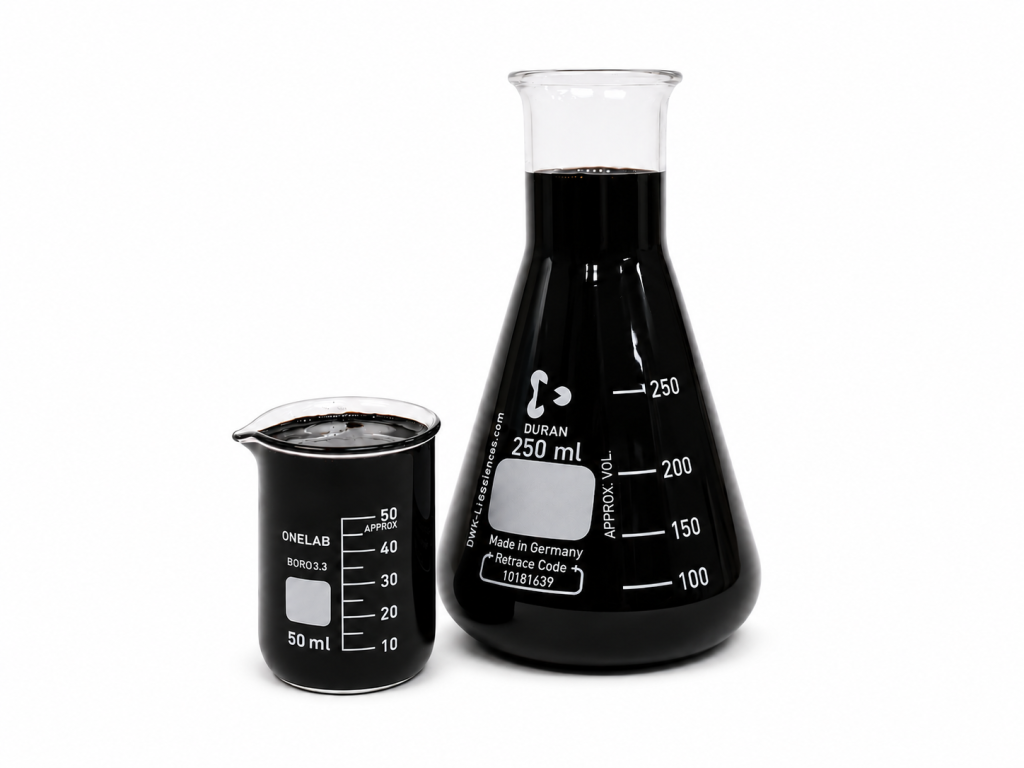
Crude Coconut Oil (CNO) is extracted from dried coconut kernels, known as copra, before refining. It is one of Bao Son’s three main products. Industrial buyers typically compare free fatty acid (FFA) content, moisture and impurities with their facility’s intake requirements.
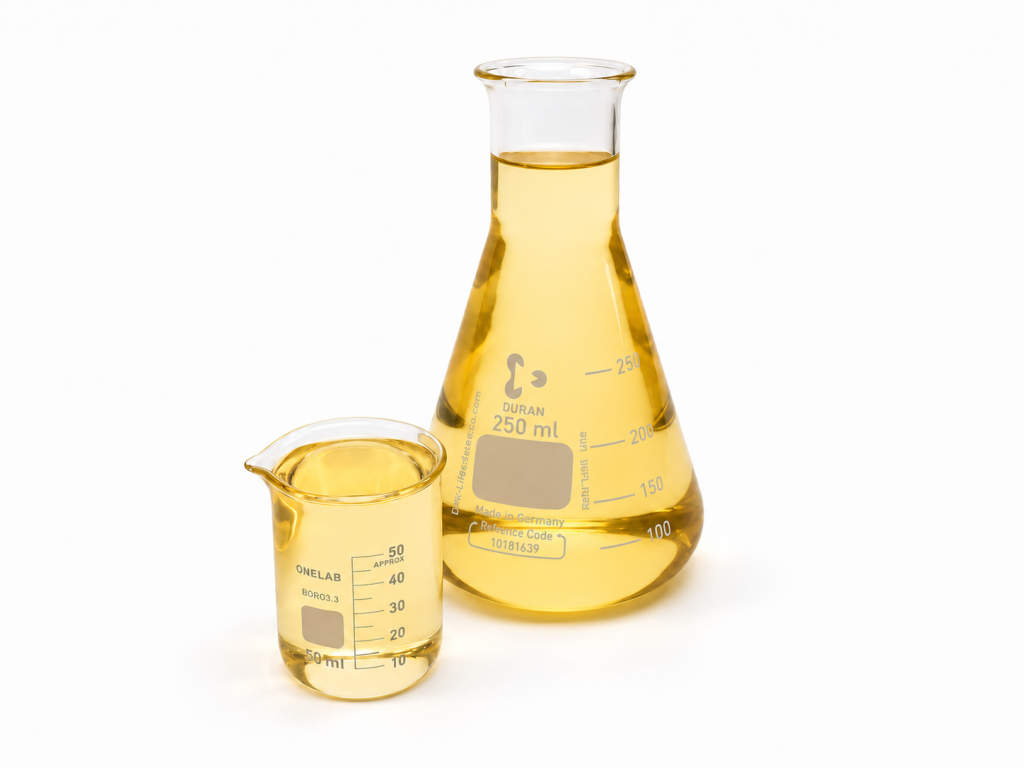
Refined Coconut Oil is one of Bao Son’s three main products. It is made by processing crude coconut oil to reduce free fatty acids and impurities and adjust its color and odor. RBD Coconut Oil has been refined, bleached and deodorized. Depending on the grade, refined coconut oil can be used in confectionery, bakery fillings, skin creams and hair care products. Buyers can compare color, odor and peroxide value with the requirements of their finished product.
Virgin Coconut Oil (VCO) is typically made from fresh coconut kernel or coconut milk without chemical refining. The intensity of its coconut aroma can vary with the extraction method.
2. By Extraction Method
Cold-Pressed Coconut Oil is extracted mechanically without applying heat during pressing. When the extraction method is part of the purchase specification, buyers can request documentation of the manufacturer’s process.
Traditionally Heat-Extracted Coconut Oil is obtained by heating coconut milk to evaporate the water and separate the oil. The oil typically has a yellow hue and a more pronounced cooked coconut aroma, depending on the processing temperature and time.
Fermentation-Extracted Coconut Oil is recovered after coconut milk is fermented to help separate the oil from water and solids. The recovered oil can then be filtered and dried to meet the required moisture limit.
3. By Composition, Physical Properties and Certification
Coconut Acid Oil (CAO) is an industrial feedstock from Bao Son derived from coconut oil refining. It can be recovered from soapstock generated during neutralization. Buyers should check the FFA content or acid value against the requirements of their process.
Fractionated Coconut Oil has a modified composition that changes its melting behavior and fluidity. Many commercial grades are rich in triglycerides containing caprylic acid (C8) and capric acid (C10).
Coconut-Derived MCT Oil is selected for its medium-chain triglyceride composition. Buyers should check the product specification if their formulation requires a particular C8-to-C10 ratio.
Liquid Coconut Oil is a commercial term that emphasizes fluidity. Some grades are also sold as fractionated coconut oil or MCT oil. Buyers should check the temperature range over which the oil remains liquid.
Organic Coconut Oil is identified by certification covering the raw materials and production process. For export orders, buyers should confirm that the certification covers the specific product and meets the requirements of the destination market.
Coconut Oil Applications by Industry
Coconut oil and its derivatives are used to make everyday products, from food and personal care items to household cleaners and fuels.
Food and Nutrition Manufacturing
Coconut oil helps food manufacturers control how products feel and hold their shape. Its melting properties are useful in formulations that need to stay firm during handling or feel smooth when eaten.
Confectionery and bakery products. Coconut oil can help give chocolate-style coatings a firm finish and bakery fillings a smooth mouthfeel.
Frozen desserts. It can be used as a source of fat to help create a creamy texture in plant-based frozen desserts.
Nutrition powders and drink mixes. Coconut-derived ingredients can provide a source of fat and energy in these formulations.
Beauty and Personal Care
In personal care products, coconut oil can soften skin and hair and help formulas spread more easily. It is also used as a raw material in cleansing products for everyday washing.
Hair care. Coconut oil is used in conditioners, hair masks and pre-wash oils to help smooth dry-feeling hair and make it easier to manage.
Skin moisturization. In creams, lotions and body oils, it helps soften dry-feeling skin and makes the product easier to spread.
Makeup removal and exfoliation. In oil-based cleansers, it can help loosen makeup. In body scrubs, it provides a base that helps distribute exfoliating particles over the skin.
Lip care. In lip balms, it acts as an emollient, helping lips feel softer and smoother.
Bath and hand soaps. Coconut oil is used to make soaps that lather and help remove oils and dirt during washing.
Oleochemical Manufacturing
Oleochemical manufacturers turn coconut-derived materials into ingredients used in cleaning products. These ingredients help water spread across surfaces and carry away grease and dirt.
Dishwashing liquids. Coconut-derived surfactants can help loosen grease and food residue so they rinse away more easily.
Laundry detergents. These ingredients can help lift oily dirt from fabrics and disperse it in the
The role of coconut oil changes with the product being made. It can give a bakery filling a smoother texture, help a lotion spread more easily or serve as a starting material for cleaning ingredients and biodiesel. For manufacturers, the intended use determines which grade to source and which specifications to check before ordering.
Coconut Oil Quality Standards and Technical Requirements
Coconut oil quality requirements vary by grade, intended use and destination market. For buyers evaluating virgin or refined coconut oil, parameters such as free fatty acid content, moisture and peroxide value help determine whether a lot meets their purchasing requirements. The sections below outline what to check for each grade and explain how to interpret the results on a Certificate of Analysis (COA).
Coconut Oil Quality Parameters Explained
Quality parameter
Typical reporting unit
What it means and why it matters
Free Fatty Acids (FFA)
% by weight, often expressed as lauric acid
Measures the fatty acids present in free form. Buyers use it to assess whether the oil meets the acidity limit for the intended application. Compare results reported on the same fatty acid basis.
Moisture or Moisture and Volatile Matter
% by weight
Moisture measures water content. A moisture and volatile matter test also captures other substances that evaporate under the test conditions. Check which test was used when comparing supplier results.
Peroxide Value (PV)
meq O₂/kg oil
Measures peroxides formed during the early stages of oxidation. Buyers use it alongside odor and other quality checks when assessing the condition of a lot.
Iodine Value (IV)
g Iodine/100 g oil
Indicates the degree of unsaturation in the oil. It helps buyers check whether the oil’s composition is consistent with the expected profile for coconut oil.
Saponification Value (SV)
mg KOH/g oil
Measures how much potassium hydroxide is needed to saponify a given mass of oil. It provides an indication of average fatty acid chain length and is useful when evaluating oils for soapmaking.
Insoluble Impurities
% by weight
Measures material that remains undissolved under the test conditions. Buyers use it to assess oil cleanliness and suitability for processes with filtration or clarity requirements.
Fatty Acid Profile
% of total fatty acids
Shows the proportions of individual fatty acids, including lauric, myristic, caprylic and capric acids. It helps buyers confirm the oil’s identity and assess its suitability for a formulation.
Appearance, Odor and Flavor
Sensory description or specified color scale
Helps buyers assess whether the oil matches the expected grade. Virgin coconut oil may retain a characteristic coconut aroma, while buyers typically select RBD coconut oil for a milder odor and flavor.
Smoke Point
°C
The temperature at which an oil begins to give off visible smoke under specified test conditions. It is relevant when selecting a grade for high-temperature food processing.
For export orders, compare the agreed limits in the product specification with the measured results in the lot-specific Certificate of Analysis (COA). Check that the units, reporting basis and test methods match before comparing results.
Bao Son’s Coconut Oil Quality Specifications
For coconut oil products from Bao Son, buyers can share their intended application and acceptance limits so the proposed grade can be evaluated against those requirements. Before confirming an export order, request the product specification and, when available, the lot-specific COA. Compare the reported results with the agreed limits to verify that the proposed lot meets your facility’s requirements.
Coconut Oil Export Packaging, Storage and Shipping
The right packaging depends on the product grade, shipment volume and how the oil will be unloaded and stored at the receiving facility. Share these details with Bao Son when requesting a quotation so the packing format, net weight and shipping arrangements can be confirmed for the order.
Bulk Packaging Options
Packaging format
What to confirm before shipment
Steel or plastic drums
Confirm the drum material, net weight per drum and how the oil will be emptied at your facility.
Intermediate bulk containers (IBCs)
Confirm the container capacity, actual net fill weight and whether the outlet fits your transfer equipment.
Flexitanks (flexibags)
Confirm the carrier-approved payload and how the oil will be discharged at the destination.
ISO tanks
Confirm the payload, discharge fittings and whether the shipment requires equipment for heating before unloading.
Jerry cans
For orders that need smaller handling units, ask whether this format is available for the selected grade and quantity.
Coconut Oil HS Codes
The six-digit HS reference for Crude Coconut Oil is 1513.11. Refined Coconut Oil generally falls under 1513.19, which covers coconut oil and its fractions other than crude, where the product has not been chemically modified. Confirm the full tariff code with your customs broker for the destination market. Coconut Acid Oil requires a separate classification review based on the product’s composition and how it was produced.
Certifications and Export Documents
If your purchasing specification requires Halal, Kosher, organic or non-GMO documentation, include that requirement in your inquiry. For supplier approval, specify any facility-level requirements such as HACCP, ISO 22000 or FSSC 22000. Confirm which documents are available and whether they cover the proposed product or production site. You can also request the product specification and ask whether a lot-specific Certificate of Analysis (COA) is available.
Storage, Shelf Life and Unloading
Follow the storage conditions specified for the selected grade. Confirm the unopened shelf life, the date from which it is calculated and any minimum remaining shelf life required on arrival. Coconut oil can partially solidify during transit in cooler conditions. For bulk shipments, agree on how the oil will be brought to a pumpable condition before discharge. For edible grades, confirm that the packaging and all oil-contact surfaces are suitable for food use.
Do Bao Son’s Coconut Oil Shipping Arrangements?
Bao Son lists Ho Chi Minh Port as the loading port for its Crude Coconut Oil. When requesting a quote for Crude Coconut Oil, Refined Coconut Oil or Coconut Acid Oil, include the grade, estimated quantity, preferred packaging, destination port, target shipment date and preferred Incoterm, such as FOB or CIF, if known. This gives Bao Son the details needed to confirm the loading port, lead time, packing and documentation for your order.
Partner with Bao Son – Your Coconut Oil Supplier in Vietnam.
Bao Son supplies coconut oil from Vietnam to importers, distributors and manufacturers worldwide. Our product range includes Crude Coconut Oil, Refined Coconut Oil and Coconut Acid Oil, each suited to different production requirements.
Tell us what you manufacture, the specifications you need, your estimated order quantity and your destination port. If you already have a purchasing specification, attach it to your inquiry so we can discuss the right product and shipment requirements.
Send Bao Son Your Coconut Oil Inquiry
Contact Our Sales Team
Contact our sales team for high-quality agricultural products, competitive prices, and reliable service.