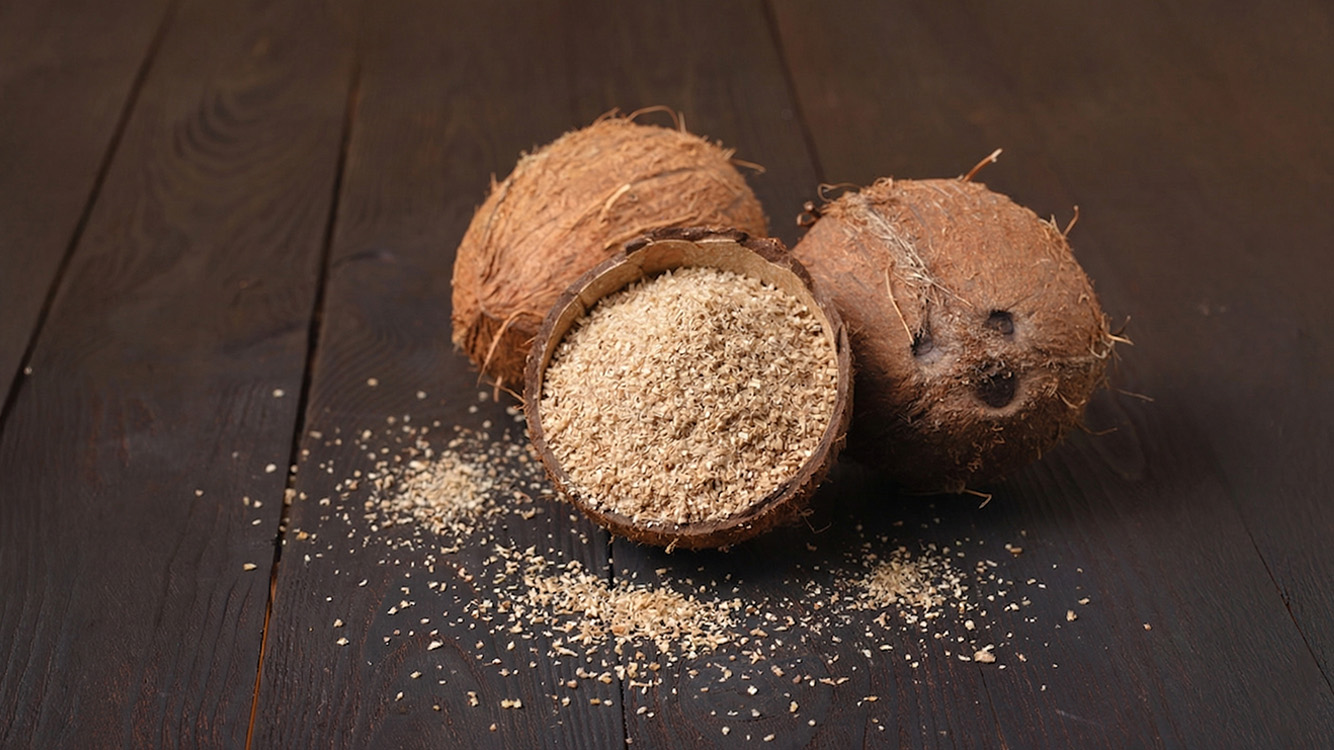
Stable raw material source
Consistent coconut meal supply from Vietnam.

For cattle feed
Consistent coconut meal supply from Vietnam.
Natural fiber and nutrients for animal growth.
Practical packing and source-direct supply.
Planned supply for international markets.
As animal feed producers seek practical alternatives to conventional protein ingredients, copra meal has become an increasingly valuable option. Produced from coconut processing, this versatile agricultural by-product provides protein, energy and dietary fiber while helping manufacturers control feed costs and support circular agriculture.
With its established coconut-processing industry, Vietnam is well positioned to supply copra meal to feed mills, livestock farms, aquaculture producers and ingredient distributors worldwide.
Copra meal—also known as coconut meal or copra extraction meal—is the solid material remaining after oil is extracted from dried coconut kernel, commonly called copra.
The general production process includes:
Depending on the extraction method, copra meal is generally classified into two categories:
The nutritional value of the final product may vary according to coconut quality, drying conditions, extraction technology, storage practices and processing efficiency.
Copra meal offers a useful combination of protein, energy and fiber. Although its protein content and amino acid profile differ from those of soybean meal or fish meal, it can serve as a cost-effective complementary ingredient in properly balanced feed formulations.
Its principal nutritional characteristics include:
Because copra meal can be relatively low in certain essential amino acids—particularly lysine—it is normally combined with other protein ingredients or appropriate amino acid supplements.
Actual nutrient values should always be confirmed through a Certificate of Analysis or laboratory testing before commercial formulation.
Copra meal can partially replace ingredients such as soybean meal and fish meal in suitable formulations. This gives manufacturers greater flexibility when ingredient prices or availability fluctuate.
As a by-product of coconut oil production, copra meal is often more economical than many traditional protein materials. Strategic inclusion can help lower formulation costs without compromising the nutritional objectives of the finished feed.
Expeller-produced copra meal retains a proportion of natural coconut oil. This residual fat can contribute energy to livestock and aquaculture diets.
Its fiber makes copra meal especially relevant to ruminant diets. When used at an appropriate level, it can complement other ingredients and support normal digestive activity.
Using copra meal turns a coconut-processing by-product into a valuable feed material. This reduces agricultural waste, improves resource efficiency and contributes to a more circular feed supply chain.
Ruminants are generally well suited to fibrous feed ingredients. Copra meal can provide supplementary protein and energy in diets for beef cattle, dairy cows, goats and sheep.
Its residual oil and fiber make it a useful component in compound feed, concentrate mixtures and farm-made rations. The appropriate inclusion rate depends on forage quality, production stage and the nutrient profile of the complete diet.
Copra meal may be incorporated at controlled levels in poultry diets as a partial alternative to conventional protein sources. Because poultry require balanced concentrations of digestible amino acids, formulations containing copra meal may need additional lysine, methionine or other complementary ingredients.
Careful formulation is particularly important for young birds, which have greater nutrient density requirements and lower tolerance for excessive dietary fiber.
In pig diets, copra meal can contribute protein, energy and fiber. It is generally more suitable for grower-finisher pigs and mature animals than for young piglets.
Its use should be balanced against the animal’s age, production stage, digestible amino acid requirements and the fiber content of the complete ration.
Copra meal can also be evaluated as a plant-based ingredient in selected fish and shrimp feeds. It may help reduce reliance on fish meal when combined with ingredients that provide complementary protein quality and digestibility.
The optimum inclusion level varies considerably among aquatic species. Feed producers should conduct formulation assessments and performance trials before large-scale application.
Consistent quality is essential when purchasing copra meal for commercial feed production. Buyers should examine the following factors:
Good-quality copra meal normally has a natural light-to-medium brown appearance and a mild coconut aroma. Material with a musty, burnt or rancid smell may indicate improper drying, oxidation or unsuitable storage.
Each shipment should be supported by a current Certificate of Analysis. Specifications should be agreed upon between the buyer and supplier before the contract is confirmed.
Copra meal should be stored in a clean, dry and well-ventilated warehouse. Bags must be protected from rain, direct contact with the floor, excessive humidity, insects and other possible sources of contamination.
Because the product may retain natural oil, prolonged exposure to heat and air can reduce freshness. Proper stock rotation and routine inspections are therefore recommended.
Available export packaging may include:
Packaging should be selected according to destination, transportation conditions and the buyer’s handling system.
Vietnam has significant coconut-growing and processing activities, particularly in the Mekong Delta and several central and southern provinces. Access to established coconut supply chains allows Vietnamese producers and exporters to offer several commercial advantages:
A capable supplier should also provide clear product specifications, batch-level quality documentation, export paperwork and dependable logistics support.
Copra meal is a practical feed ingredient that combines commercial value with environmental benefits. Its protein, residual energy and fiber make it suitable for various livestock and aquaculture applications when it is properly analyzed and professionally formulated.
For feed manufacturers, copra meal can diversify ingredient sourcing, reduce exposure to expensive conventional proteins and support more efficient use of agricultural resources. Successful application, however, depends on consistent quality, accurate laboratory data and inclusion levels tailored to the species and production stage.
Looking for a reliable supply of Vietnamese copra meal? Contact us for product specifications, packaging options